

 Acadia University
Amaltaqiaqwey – Mayflower
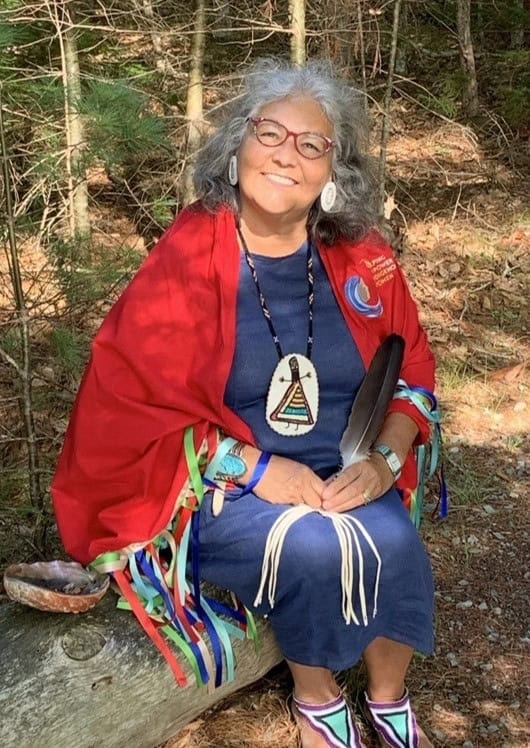
Dr. Lorraine Whitman is a member of Glooscap First Nation. She is the daughter of the late Chief Joseph Peters and Elder Doris (Brooks) Peters and granddaughter of the late Chief Louis Peters of Bear River First Nation. Lorraine is 1 of 14 children.
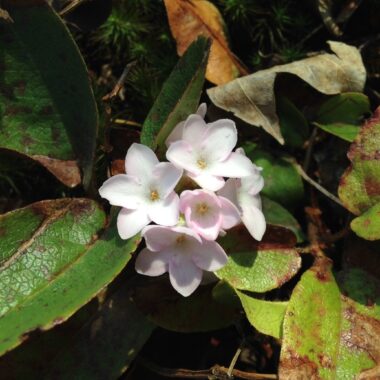
To many, the mayflower and its sweet scent are a sign of Spring.
Traditionally, the Mi’kmaq would collect bouquets of mayflowers and place them in birchbark cones lined with moss to be sold.
Listen to a memory that Lorraine shared with us about eating the sweet nectar from mayflowers in spring when she was a child.
Memories of Ghost Pipe
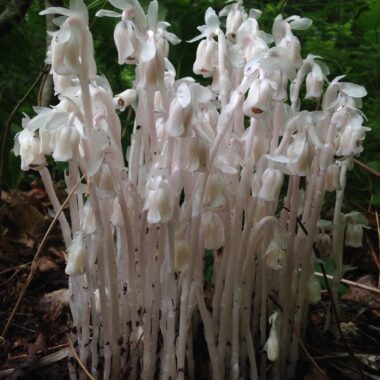
According to Mi’kmaq legend, the presence of ghost pipes is a marker of where their ancestors have passed away. Due to this legend, it is warned against picking the ghost pipe, as not to disturb the ancestors’ spirits.
The ghost pipe is a parasitic plant that lacks chlorophyll. The lack of chlorophyll is what gives the plant it’s ghostly white colour. Since the plant cannot photosynthesize its own energy, the plant establishes a parasitic relationship with mycorrhizal fungi to obtain nutrients.
The latin name for this plant is Monotropa uniflora, in the past it was commonly called Indian Pipe. Language has been updated and it is now known as ghost pipe or corpse flower. We have not been able to find a Mi’kmaq name for this plant.
Listen to members of Pictou Landing First Nation talking about their memories of ghost pipe from childhood.