

 Acadia University
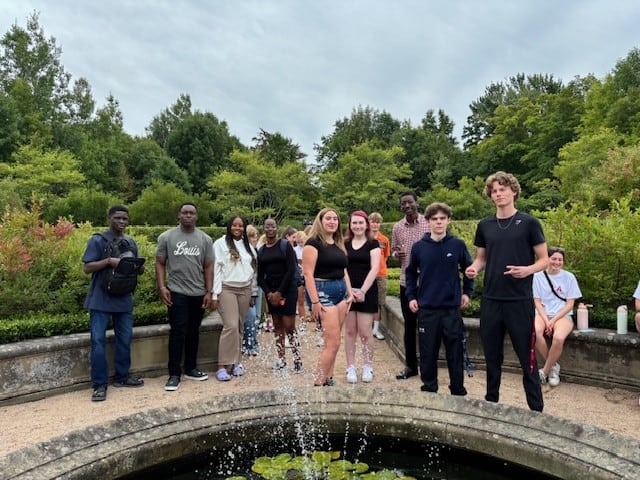
The Harriet Irving Botanical Gardens is the perfect space for Acadia University students to learn hands-on about the natural world and our place within it. More than a repository of plants, it is an outdoor classroom where learning and research take place. This fall, hundreds of Acadia students took part in outdoor learning by visiting the Gardens through courses such as Plants Habitats and Climate Change, Indigenous Studies and Physically Active Living.
Biology Courses
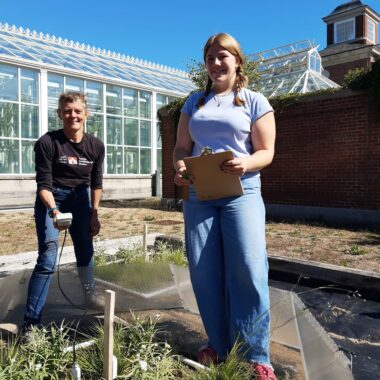
During their time at the Gardens, students in Dr. Zoe Panchen’s Plants Habitats and Climate Change (BIOL4003) learned about our nine featured Wapna’ki habitats. Students took a close look at the morphology of various plant species, their associated traits and adaptations to challenging environmental conditions. In addition, students learned how to take plant trait measurements of specimens cultivated in open top chambers and control plots in the Experimental Garden. Open top chambers heat the enclosed plots by an additional 1-3 °C and are used to simulate climate change and study the effects of elevated temperatures on plant growth and development; a great way for students to study what a warming climate means for plants.
Alain Belliveau’s Flora of Nova Scotia (BIOL3293) students toured the Botanical Gardens to learn about the habitats and plants found in the province prior to heading into the field to see plants in their natural habitats. Flora students conducted course projects that involved specimens from our living collection, tracked pollinators and conducted seed viability and germination testing.
Jennifer Kershaw’s Biodiversity of Plants and Algae (BIOL2043) students went on a scavenger hunt through the Botanical Gardens. While looking for specific plant structures, they learned a whole new suite of botanical terms. This hands-on activity gave them the chance to apply their new knowledge in an engaging way while having access to tangible examples. Students also spent time in the Gardens collecting seeds from native plants and learning about the medicinal and edible plants that are cultivated in our Food and Medicinal Garden.
During one of their labs at the Botanical Gardens, students in Kendra Sampson’s Organisms and their Environment (BIOL1110) course learned about binomial nomenclature, how to identify plant species using dichotomous keys, the difference between western science and Traditional Knowledge, and traditional uses of plants. The Traditional Knowledge lab was created by Acadia student Leah Creaser, a member of the Acadia First Nation, in collaboration with Dr. Juan Carlos López when she was an undergraduate. This lab is now taught to every first-year biology student at Acadia University.
Environmental and Sustainability Studies Courses
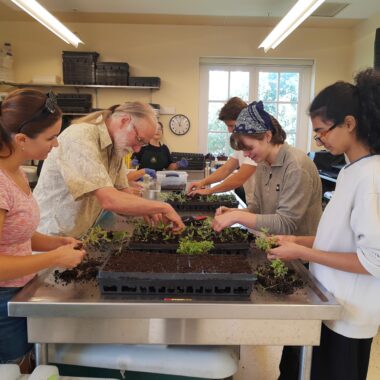
Gary Schneider’s Ecological Forestry (ESST3993) students gained a deep understanding of the Wapna’ki forest and the ecological principles and practices for restoring it during an engaging, hands-on course taught in the summer intersession on the Woodland Trails and Gardens. Garden staff also took the students on a behind the scenes tour of the Irving Centre greenhouse where they learned more about native plant propagation.
Students in Chaiti Seth’s Land-based Learning & Ecological Resilience Practices (ESST2023) course explored frameworks, practices, and tools for land-based learning, cultivating resilience, and building capacity for connection and joy while working for transformative change in the field of sustainability. Students in this course spent time in the Gardens using a pedagogical approach that acknowledges land as teacher. Students practiced nature observation and listening skills, explored systems and complexity thinking in the context of the living world, and engaged in nature-based art and mindfulness practices. Several students also spent time in the garden as part of a course-related assignment; walking, observing, working on plant identification, and more.
Education and Kinesiology Courses
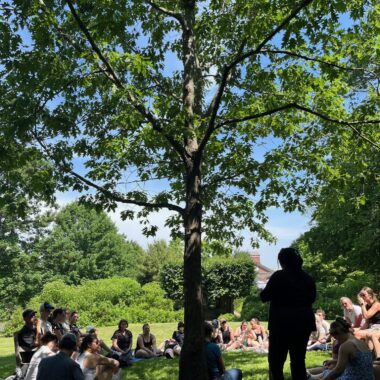
Melissa Labrador took several groups of education students to the Botanical Gardens as part of her Indigenous Studies (EDUC42K3) course this year. Students had the opportunity to learn about land-based teaching and were introduced to Traditional Ecological Knowledge and Mi’kmaw uses of both medicinal and edible plants of the Wapna’ki Forest. The alternative ways of teaching shared by Melissa equipped future educators with tools to make the learning experience more inclusive and accessible, especially for Mi’kmaw youth.
Sarah Mackinnon’s Physically Active Living (KINE1993) students explored practical strategies for integrating wellness into their daily lives. Following their first test, they participated in a wellness walk through the Gardens. Students were given a mindfulness-based worksheet to guide their reflections while in nature. The purpose of the activity was to help students recognize the value of mindful pauses during periods of stress and to introduce them to a beautiful on-campus resource they can return to whenever they need a quiet moment to reset and recharge.
These are just some examples of the classes that took place at the Harriet Irving Botanical Gardens this fall. We look forward to welcoming even more students to participate in hands-on, outdoor learning in 2026.